Hail resistance
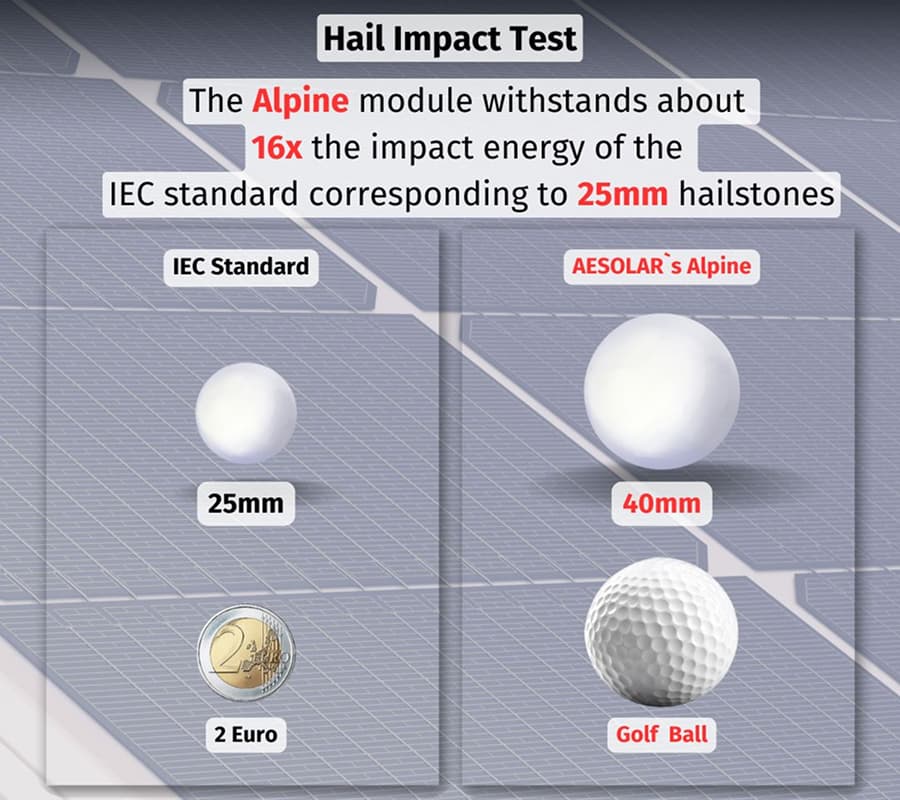
40 mm @ 27.54 m/s
Exceeds IEC 25 mm @ 23 m/s. TÜV Rheinland: no visual defects, minimal power degradation.
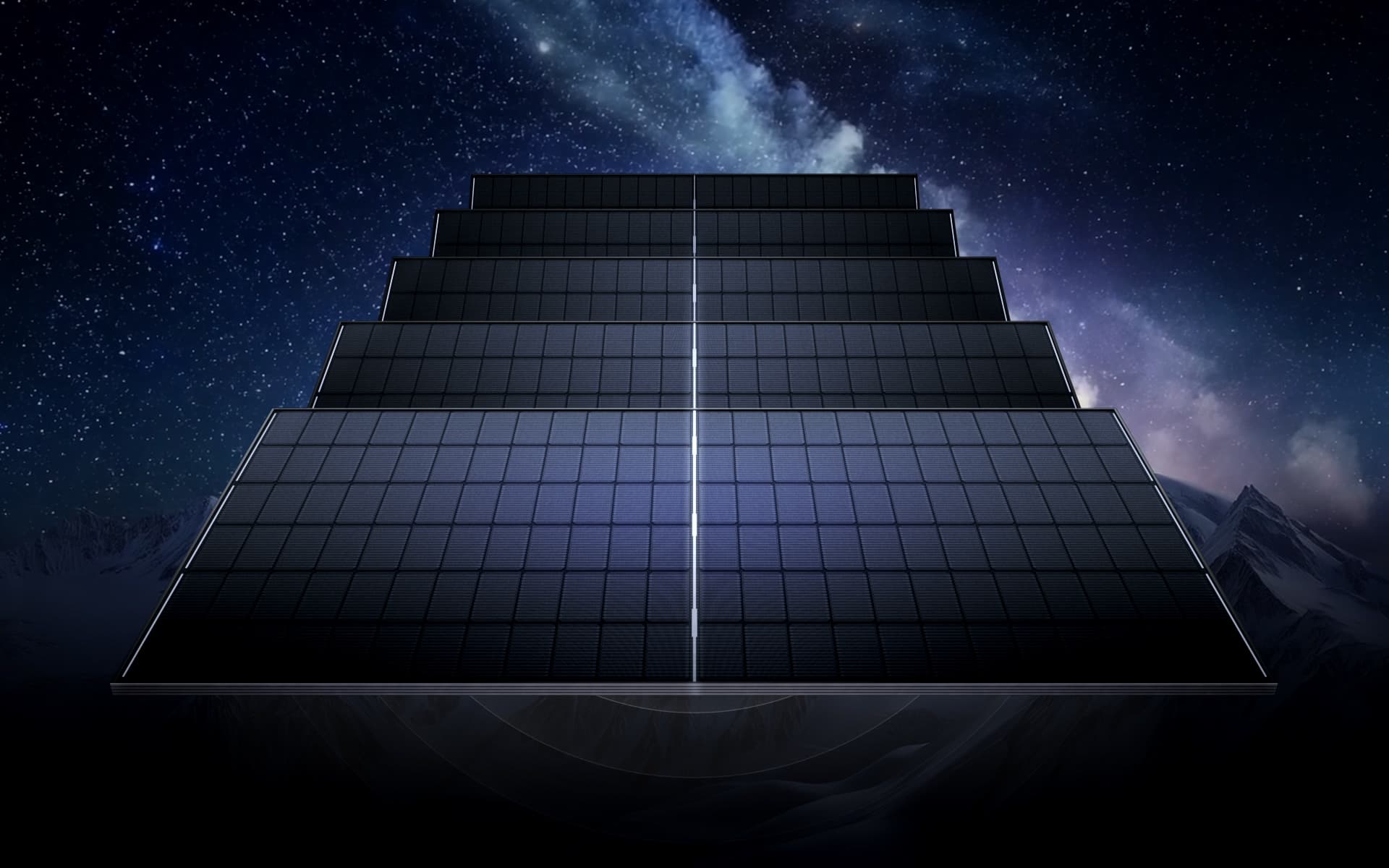
§ 00 Energy stack · AESOLAR Alpine · Design target · pre-COD
Hail-proof. Weather-ready. Solar strong — durable, reliable, high-performance PV for harsh conditions.
AESOLAR's Alpine Series represents a leap forward in photovoltaic module durability, engineered to excel under the harshest weather conditions. Designed specifically to endure severe hailstorms, the Alpine Series delivers unmatched performance, reliability, and resilience, cementing AESOLAR's position as a global leader in solar innovation. AGICY includes Alpine in the campus energy hardware stack — hail-class modules designed to pair with BESS so AI load is not trapped in midday-only solar. DESIGN TARGET
§ 01 Key facts · Vendor · AESOLAR
Exact published facts from AESOLAR. Third-party hail verification via TÜV Rheinland. AGICY status remains pre-construction — this is stack selection, not COD.
Hail resistance
40 mm @ 27.54 m/s
Exceeds IEC 25 mm @ 23 m/s. TÜV Rheinland: no visual defects, minimal power degradation.
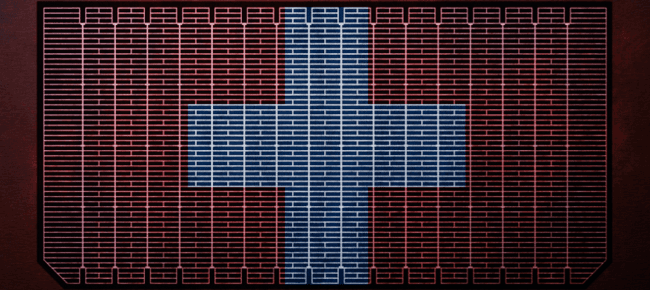
Swiss Hail VKF
HW4
Passed at TÜV Rheinland Cologne — 40 mm hailstones, >11.1 J, 16 impact points.
Front glass
3.2 mm tempered
High-transmission AR-coated tempered safety glass.
Wind load
up to 3600 Pa
6005-T6 anodized aluminium frame — ~275.7 km/h equivalent (vendor).
Cell / design
n-Type TOPCon · bifacial
Double-glass modules across the Alpine SKUs below.
Warranty (up to)
30 years
Product warranty up to 30 years per AESOLAR; confirm Limited Warranty for special conditions.
§ 02 Construction · Hidden layers
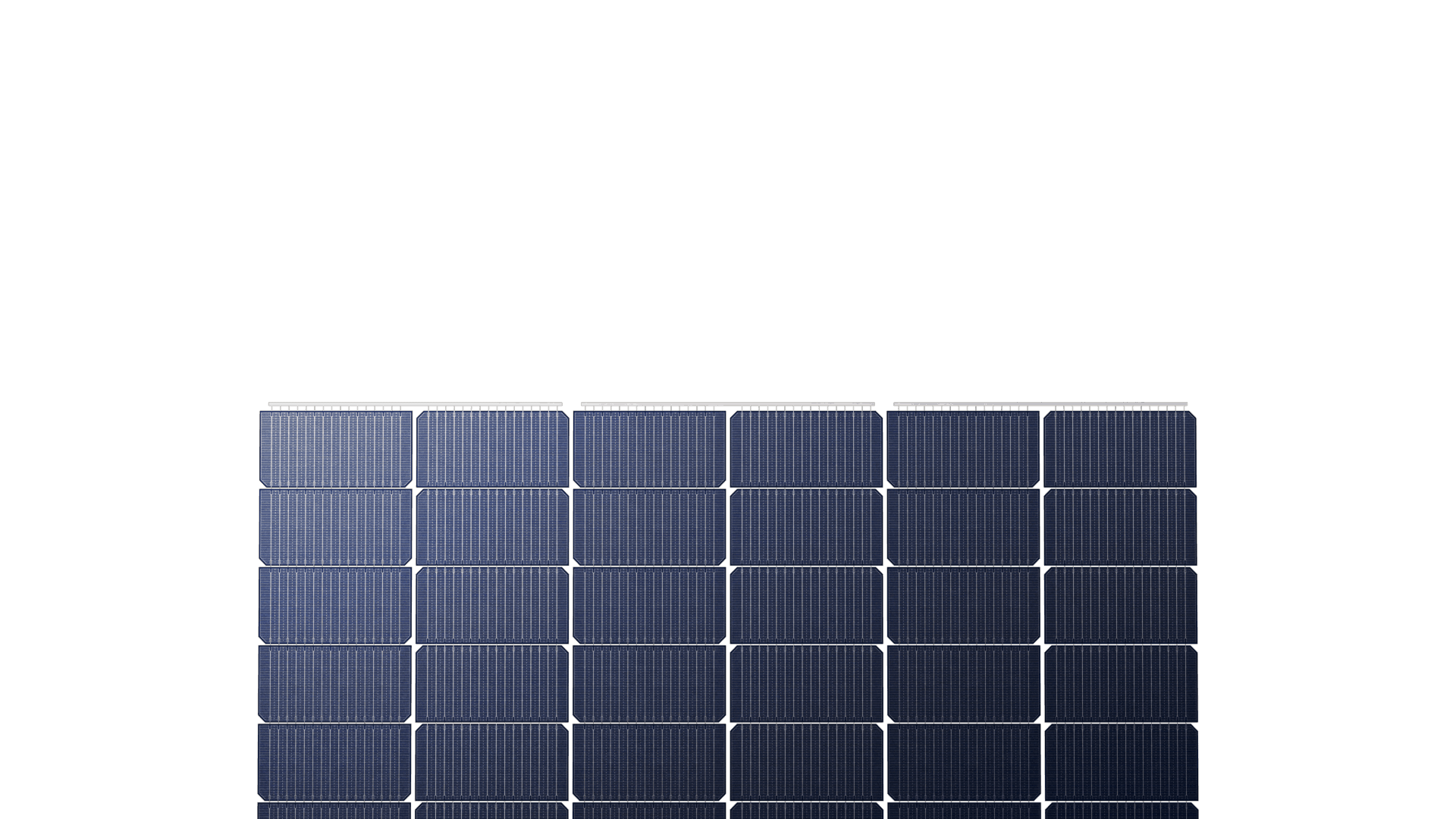
Tempered safety glass (3.2 mm) offering outstanding impact resistance, including hailstones up to 40 mm in diameter.
High-grade sealing layer that protects solar cells from moisture and mechanical damage, extending the panel’s lifespan.
Engineered to convert sunlight into electricity with exceptional efficiency, even under harsh weather conditions.
Advanced insulation material providing extra protection and longevity for internal solar cell layers.
Reinforced layer that enhances panel rigidity and safeguards internal components from environmental factors.
High-strength anodized aluminium alloy for durability under extreme wind and hail impacts.
Swiss Hail VKF HW4 at TÜV Rheinland Cologne: 40 mm hailstones, >11.1 J, 16 impact points. Verified — no visible damage, no EL micro-cracks, no power degradation, passed insulation and wet leakage tests.
Swiss Hail VKF HW4 Level Certification, certified by TÜV Rheinland.
6005-T6 high-strength anodized aluminium alloy frame withstands wind loads up to 3600 Pa — critical when hail arrives with extreme winds.
Built for hail-prone regions to reduce force-majeure damage and long-term financial loss for developers, EPCs, and asset owners.
§ 03 Modules · Datasheets
§ 04 Anytime solar · PV · BESS · nuclear watch
Ember (12 Aug 2026): solar hit a record 10% of global electricity in H1 2026 — over a quarter of demand at midday, near zero at night. New 2026 batteries could shift about 34% of new daily solar into non-sunny hours. That is the competitive gap: hail-class PV without storage still leaves fossil evenings; Alpine + BESS is how AGICY designs day-one integration for 24/7 compute. Chemistry can evolve — Phase 1 stays LFP; sodium-ion is on the eval lane. Longer horizon: portable microreactors and maritime SMRs stay a future check only.
Phase 1 baseline · BP
20 MWh / 10 MW
Lithium iron phosphate UPS / bridge power in the current CapEx path. Bankable, compact, mature warranties. Ember’s anytime-solar shift does not require a new chemistry — it requires enough storage. Pre-COD design target.
Phase 2+ · quote-only
Na-ion BESS
Newest stationary chemistry class. pv magazine (10 Aug 2026) cites commercial SIBs at ~100–160 Wh/kg with advanced prototypes approaching 200 Wh/kg; CATL / Faradion / TIAMAT already in stationary/light-mobility. CATL TENER Sodium: China 2026, global deliveries often cited mid-2027. Diligence / quote-only. Not an exclusive endorsement and not a CapEx lock.
Firm zero-carbon baseload beyond PV + BESS — watchlist only. Not CapEx, not COD, not an EU siting claim.
Future check · microreactor
~1 MWe portable
Containerised HTGR “reactor-in-a-box” (TRISO, helium-cooled, ~1 MWe / ~3.5 MWt). INL DOME full-power testing path in 2026; vendor commercial target ~2028. US-origin — licensing, export, and EU/Cyprus siting remain open. Watchlist only: not CapEx, not COD, not an endorsement.
Future check · MARAD lane
~10 MWe barges
July 2026: Port of Long Beach became the first U.S. seaport to sign a MARAD MOC on commercial maritime reactors (with USCG / DOE / NRC on protocols). Same month the port leased space to BlueCore Energy for ~10 MWe water-cooled SMR modules on floating barges — assemble / test / store at the port. Signal for port electrification and mobile firm power; still early, U.S.-centric, not an AGICY CapEx or COD path.
Sources: Ember — Batteries have unlocked the era of anytime solar · CATL TENER Sodium public launch materials (2026) · Radiant Nuclear · ANS — Long Beach / MARAD maritime reactors. External research / vendor claims — not AGICY offtake or CapEx change.
§ 05 FAQ · Energy stack
Campus AI load needs durable, high-irradiance PV that survives Mediterranean extreme weather — not just nameplate watts. Alpine is AESOLAR’s hail-class series (3.2 mm glass, Swiss VKF HW4, wind to 3600 Pa). AGICY lists it as a design-target PV option for day-one energy integration beside BESS and generation (H₂ blending is TARGET / not a COD fact). Pre-COD — not a claim that Alpine is already installed at Vasilikos.
Yes — Alpine is HW4-class, not exclusive. Peers include AIKO Neostar/Stellar (early Swiss HW4, higher efficiency), Trina Vertex S+ Shield (HW4 + fire A+A), Jinko Tiger Neo HW4 SKUs, and LONGi Hi-MO 9 Ice-Shield (vendor tests into ~45–55 mm hail). AGICY keeps Alpine as one design-target option; bankability, LCOE, and EPC fit decide any real shortlist. See /hardware/ae-solar#ae-03.
Ember’s Aug 2026 analysis shows solar already meeting ~10% of global electricity in H1 2026 and over a quarter of demand at midday — then near zero at night. Batteries are what turn daytime solar into evening/anytime electricity. An AI campus that only buys daytime PPA without storage still leans on fossil hours after sunset. AGICY’s stack pairs hail-class PV intent with BESS so compute is designed around flexible clean power, not midday-only solar.
Ember’s anytime-solar thesis is about shifting midday PV into non-sunny hours — chemistry is secondary to having enough storage. Phase 1 keeps Tesla Megablock LFP as the bankable UPS / bridge chemistry in the CapEx path. Sodium-ion (e.g. CATL TENER Sodium and peers) is a Phase 2+ evaluation lane. A 10 Aug 2026 pv magazine review puts commercial SIB density at ~100–160 Wh/kg, with some advanced prototypes approaching 200 Wh/kg. Quote-only diligence, not a CapEx replacement. Research: /research/sodium-ion-batteries-ai-storage.
PV + BESS covers anytime solar for the near path. Firm zero-carbon baseload is a longer horizon. Radiant’s Kaleidos (~1 MWe portable HTGR, TRISO, containerised) is on a future-check watchlist — INL DOME testing in 2026, vendor commercial target around 2028. Adjacent signal (July 2026): Port of Long Beach–MARAD MOC on maritime reactors, with BlueCore Energy leasing for ~10 MWe floating SMR barges. European peers (Seaborg, CORE POWER, Blykalla, NUWARD, Rolls-Royce SMR) are mostly larger SMRs, not 1 MWe clones. None are in CapEx, required for COD, or an EU siting claim. Research: /research/radiant-kaleidos-microreactor-ai, /research/maritime-smr-ports-ai-power, /research/european-smr-ai-datacenters.
Many competitors size silicon first and treat power as a later offtake problem. AGICY designs fleet IT load, on-site generation, PV, and battery storage as one programme from day one — so reservation economics, ESG reporting, and COD planning share the same energy path. That is the gap we want licensed energy developers to help close.
Per AESOLAR: n-Type TOPCon bifacial modules; power bands 430–450 W, 440–460 W, and 575–595 W; efficiency up to ~22.54–23.05%; 3.2 mm tempered front glass; hailstones up to 40 mm at 27.54 m/s (vs IEC 25 mm / 23 m/s); Swiss Hail VKF HW4 (TÜV Rheinland); frame wind load up to 3600 Pa; product warranty up to 30 years. Download the SKU datasheets on this page.
Current developers, EPCs, and operators with active licences/permits to sell, rent, or build AI compute stations combined with a PV energy pipeline and fast-charging / BESS — especially projects of 500 kWp and above in Cyprus, Greece, or the wider EU. This is a partnership / co-development conversation, not a retail crowdfunding offer and not a live MW claim. Use Contact Us and select the energy / infrastructure path.
No exclusive endorsement claim. Alpine facts are AESOLAR’s published product data. AGICY’s campus remains pre-construction / pre-COD. Any procurement, offtake, or joint venture follows diligence, permits, and definitive contracts — register interest via /contact.
Same FAQ bank also lives on /sustainability.
§ 06 Developers · ≥500 kWp
We are seeking current developers with licences and permits to sell, rent, or build AI stations combined with an energy pipeline of PV stations and fast-charging / battery storage — especially projects over 500 kWp. Day-one integration of compute + anytime solar is the wedge most competitors have not designed for.
Not crowdfunding, not a public securities offer, and not a live MW claim. Interest only — diligence and permits required. AGICY campus remains pre-COD.